


Executive Summary
The Convergence of Forces
The European hospitality sector is at a critical inflection point, where a confluence of powerful forces is making the adoption of AI-driven concierge automation not just a competitive advantage, but a strategic necessity for survival and growth. The primary driver is a severe and persistent labour shortage that has gripped the industry across the continent. With vacancy rates in hospitality remaining between 3.5% and 4.2% in early 2025—significantly above pre-pandemic levels—and nearly half of European hoteliers struggling to hire and retain skilled workers, the traditional operational model is under unprecedented strain [1] [25].
Simultaneously, Europe's position as the world's most linguistically diverse travel destination presents a formidable operational challenge. The constant influx of guests speaking a multitude of languages, from Mandarin and Arabic to Russian and Portuguese, places immense pressure on frontline staff and creates a high risk of miscommunication, leading to guest dissatisfaction and operational inefficiencies [10] [14].
Europe's Unique Position
Europe's path to concierge automation is distinct from that of other major markets like the United States and Asia-Pacific. Unlike the U.S., where a more permissive regulatory landscape and a focus on large-scale, venture-backed innovation drive rapid, often aggressive, technology adoption, Europe's approach is more measured and compliance-driven [8]. The European market, with its emphasis on GDPR and the AI Act, necessitates the development of AI solutions that prioritize data protection, transparency, and ethical use from the ground up [4] [5].
The European Hospitality Landscape (2025–2035)
Market Size and Economic Projections
The European hotel market is on a clear upward trajectory, with revenue projections indicating robust growth through 2035. According to market analysis from Statista, the European hotel market is expected to generate approximately US$121.07 billion in revenue by 2025 [170]. This figure represents a significant recovery and expansion from the pre-pandemic era, driven by a resurgence in both leisure and business travel.
Looking further ahead, the broader European travel accommodation market is forecast to grow at a compound annual growth rate (CAGR) of 7.11% between 2026 and 2033, reaching a market size of US$23.41 billion by 2033 [162].

Property Distribution
Source: Eurostat 2022
Regional and Operational Dynamics
Europe's status as the world's most linguistically diverse travel destination creates a uniquely challenging operational environment. In 2022, EU tourist accommodations recorded 1.2 billion overnight stays by international visitors, with 35% coming from outside the EU [247]. This constant flow of international visitors means that on any given day, a hotel could be hosting guests speaking German, French, Italian, Spanish, Mandarin, Hindi, Arabic, Russian, and Brazilian Portuguese, among many others.
Labour Market Pressures: The Automation Imperative

Quantifying the Staffing Crisis
The staffing crisis in European hospitality is not anecdotal; it is a well-documented and quantifiable reality. Data from the European Accommodation Barometer 2025 shows that the most acute shortages are found in management, sales and marketing, event planning, and spa and recreation roles [249]. The shortage is particularly pronounced in popular leisure destinations in Southern Europe.
Skills Gap by Country (% of operators citing skills shortage)
EU Average: 47% | Source: European Accommodation Barometer 2025
Structural Challenges
These structural weaknesses are fundamental to the current labour crisis and are a primary driver of the need for automation. The reliance on a shrinking pool of skilled workers, many of whom are migrants or seasonal employees, is no longer a sustainable strategy [53].
The Automation Imperative
The direct and undeniable link between widespread labour scarcity and the urgent need for automation is clear. AI concierge systems can act as a "load-balancer" for understaffed reception desks, handling a high volume of routine, repetitive inquiries 24/7 without fatigue. By automating these tasks, hotels can free up their limited human staff to focus on more complex, high-value interactions that require empathy and creativity [15].
Multilingual Guest Expectations: A Uniquely European Challenge
The Scale of Linguistic Diversity
Europe's status as the world's most linguistically diverse travel destination presents a formidable operational challenge. In 2022, EU tourist accommodations recorded 1.2 billion overnight stays by international visitors. While 65% of these were from other EU countries, a significant 35% came from outside the EU, including 22% from other European nations and 13% from other continents [247].
The top destinations for international tourists in 2023 were Spain, Italy, France, Greece, and Austria, attracting a diverse mix of global visitors speaking Mandarin, Hindi, Arabic, Russian, and Brazilian Portuguese, among many others [35].
Top Inbound Tourist Languages

Guest Communication Challenges
The Cost of Miscommunication
The consequences of language barriers in hospitality are not just a matter of inconvenience; they have a real and measurable cost. Miscommunication can lead to a wide range of negative outcomes, from minor errors in room service orders to major issues with billing and safety. These errors can result in guest complaints, negative online reviews, and a loss of repeat business.
Impact on Guest Experience
- • Frustration and alienation
- • Negative online reviews
- • Loss of repeat business
- • Reduced service quality perception
Operational Consequences
- • Increased staff workload
- • Higher error rates
- • Longer resolution times
- • Reduced efficiency
The Solution: Real-Time Translation
The solution to the challenge of multilingual communication lies in the deployment of technology that can provide real-time, accurate, and culturally sensitive translation. AI-powered concierge systems offer instant, high-quality translation that is integrated directly into the hotel's communication workflow, allowing for a seamless and natural conversation between staff and guests, regardless of the language they speak [58].
The Regulatory Framework Shaping AI Adoption
The adoption of Artificial Intelligence in the European hospitality sector is not merely a technological or economic decision; it is a profoundly regulatory one. The continent's stringent and pioneering legal framework, designed to protect individual rights and ensure digital sovereignty, creates a unique operational environment for hotels. This framework is primarily defined by three landmark pieces of legislation: the General Data Protection Regulation (GDPR), the EU AI Act, and the Digital Services Act (DSA) [363] [374].
GDPR
The foundational pillar of data privacy and security in Europe, requiring data minimization, explicit consent, and privacy-by-design principles.
EU AI Act
The world's first comprehensive AI framework with a risk-based approach and significant penalties for non-compliance.
DSA
Digital Services Act focusing on transparency, accountability, and user protection for digital platforms.
EU AI Act: Penalties and Enforcement
| Violation Category | Maximum Fine |
|---|---|
| Prohibited AI Practices | €35 million or 7% of global annual turnover |
| High-Risk AI Non-Compliance | €15 million or 3% of global annual turnover |
| Incorrect Information | €7.5 million or 1.5% of global annual turnover |
Source: InsideHospitality, Hotel on the Moon
Key Implications for Hotels
GDPR Requirements
- • Data minimization principles
- • Explicit consent mechanisms
- • Automated data deletion
- • Privacy-by-design approach
AI Act Compliance
- • Risk-based classification
- • Human oversight requirements
- • Conformity assessments
- • Technical documentation
Technology Adoption Patterns in European Hotels
Current State of AI Adoption
AI Adoption Status
Source: European Hotelier Survey 2025
The survey data reveals a market that is cautiously optimistic but also faces significant hurdles. While 41% of European hotels reported using AI in some form, the majority of applications are focused on specific, high-impact areas rather than broad, systemic change. This suggests that for many hotels, the path to AI adoption is a gradual one, starting with simple applications and slowly building towards more complex and integrated systems.
Common AI Applications
% of AI-adopting hotels using each tool
Structural Barriers to Adoption
PMS Fragmentation
Profound fragmentation of Property Management Systems makes integration difficult and costly, requiring bespoke development work for each connection.
Budget Constraints
Small property sizes and tight margins make it difficult to justify high upfront costs, with 35% citing high setup costs as a major barrier [351].
Technical Expertise
Limited IT resources and technical expertise in SME hotels create anxiety around implementation and ongoing management of complex systems.
Global Comparison: Europe vs. U.S. vs. APAC
| Region | Market Characteristics | Adoption Approach | Key Drivers |
|---|---|---|---|
| Europe | Fragmented, SME-dominated, stringent regulations | Cautious, compliance-first, gradual | Labour shortages, GDPR, AI Act |
| North America | Chain-dominated, large-scale, capital-intensive | Rapid, standardized, enterprise-wide | Scale, investment, tech-savvy consumers |
| APAC | Fast-growing, innovation-focused, mobile-first | Experimental, novel experiences, rapid | Government support, digital transformation |
Market analysis based on HTF Market Insights 2025
Defining the New Category: AI Concierge Automation
What Concierge Automation Is NOT
Beyond Simple Chatbots
Not a simple chatbot or FAQ widget. These tools lack the intelligence, flexibility, and integration required to be a true concierge. AI concierge automation is an active, intelligent system that understands context and handles complex requests.
Not a Full Replacement
Not intended to replace human staff. The goal is to augment human capabilities, creating powerful human-AI collaboration where routine tasks are automated, freeing staff for high-value interactions requiring empathy and creativity.
What Concierge Automation IS
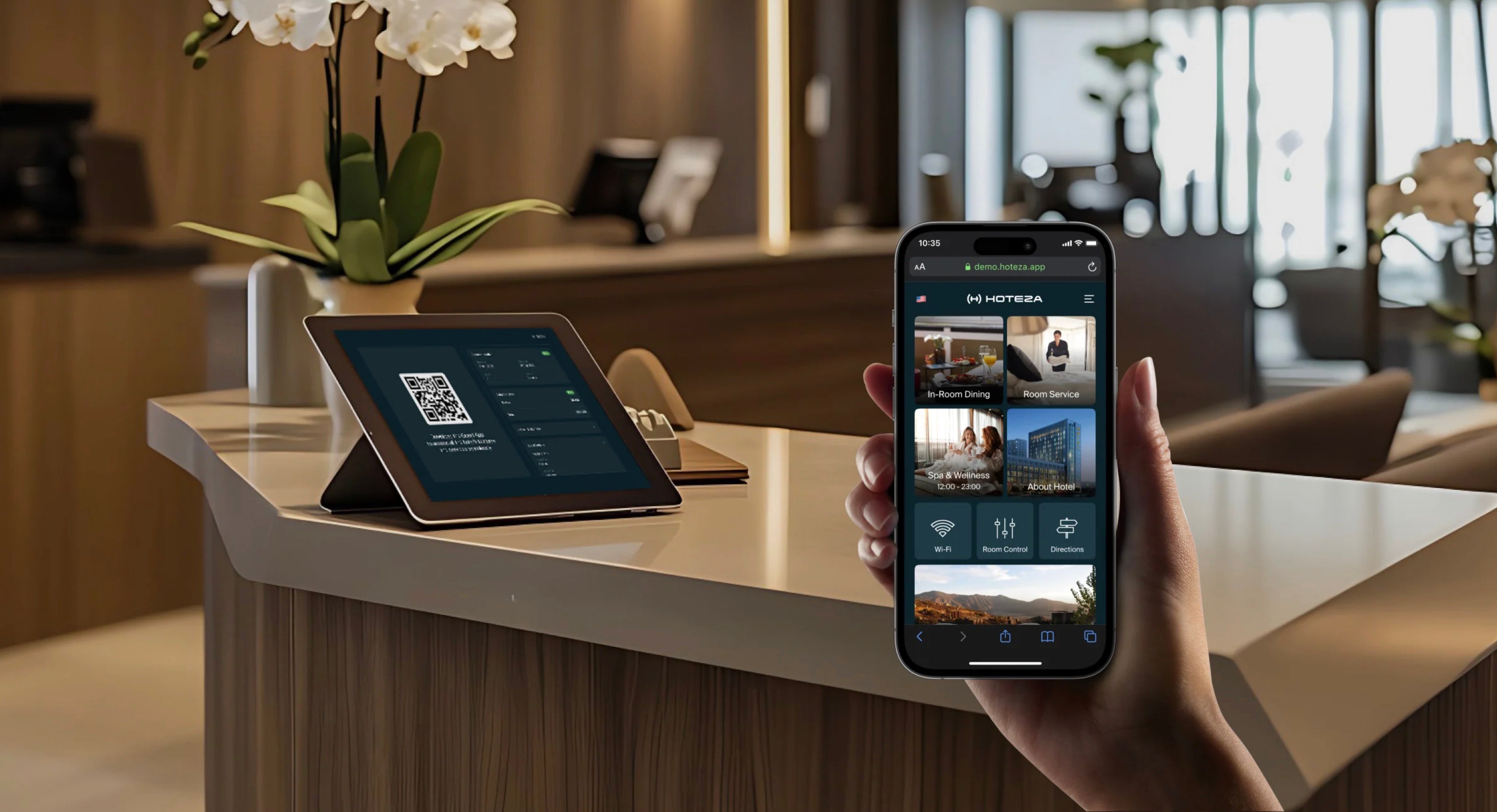
A new operational layer for the hotel - a sophisticated, AI-powered infrastructure that functions as:
- • 24/7 multilingual messaging system
- • Load-balancer for understaffed reception
- • Intelligent guest and staff assistant
- • Core operational ecosystem component
Core Capabilities
Translation
Real-time, accurate multilingual communication
Knowledge
Hotel-specific knowledge base with easy updates
Escalation
Intelligent transfer to human staff with full context
Routing
Smart routing to appropriate departments
The "Operational Rail" Concept
AI concierge automation functions as a new "operational rail" for the hotel, acting as a powerful load-balancer for understaffed reception desks. In an era of chronic labor shortages, this is a critical capability. The AI system can handle a high volume of simultaneous conversations, answering routine questions, processing simple requests, and providing information without any human intervention.
This load-balancing function is not just about efficiency; it is also about staff well-being. By automating routine tasks, hotels can reduce the workload on often-overburdened front desk staff, allowing them to spend more quality time with guests who have unique or complex needs. This creates a more engaging and less stressful work environment, which in turn helps with staff retention—a critical issue in an industry plagued by high turnover rates [290].
Case Study: Roomlingo as an Illustrative European Model
Positioning in the European Market
Roomlingo emerges as a compelling representative model of a solution designed specifically to address Europe's unique challenges. The platform's core value proposition is built on the premise that effective, multilingual communication is the cornerstone of a positive guest experience, and that this is becoming increasingly difficult to achieve with traditional staffing models [134].
By offering an AI-powered assistant that can handle guest inquiries in over 30 languages, Roomlingo directly targets the linguistic diversity that defines European tourism. This is not a peripheral feature but the central pillar of its offering, designed to eliminate the friction and potential for error that arises when guests and staff do not share a common language [44].
Core Value Proposition
- • Real-time multilingual communication (30+ languages)
- • 24/7 auto-response capability
- • Load balancing for understaffed reception
- • GDPR-aligned security and privacy
- • Low-overhead implementation for SMEs
User Testimonial
"Response times have improved dramatically since implementation. The multilingual capability has been a game-changer for our international guests."— Hotel Manager, European property
Core Features Analysis
Multilingual Communication
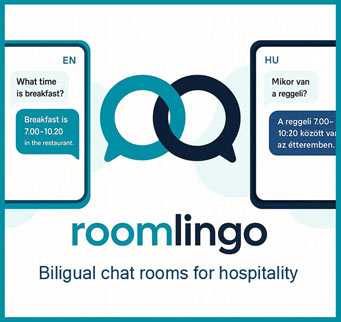
The system supports over 30 languages, enabling seamless conversation between hotel employees and guests who speak different languages. The platform shows a split-screen view where a host writing in English can communicate with a guest responding in French.
AI Knowledge Base
Hotels can create custom knowledge bases by uploading their own documents, FAQs, house manuals, and policy documents. The AI is trained on this specific information, providing accurate, on-brand responses.
Alignment with European Requirements
GDPR Alignment
Designed with GDPR principles at its core, featuring timed data deletion and end-to-end encryption to ensure compliance and build trust.
Low Overhead
Browser-based interface accessible from any device without software installation, ideal for SMEs with limited IT resources.
SME Focus
Priced and packaged for European SMEs with clear ROI demonstration and minimal training requirements.
Representative Model of European-Friendly Automation
Roomlingo serves as an excellent illustrative model of the type of AI concierge automation that is poised to succeed in the European market. It is not a monolithic, one-size-fits-all solution, but a focused, agile, and highly practical tool designed to solve the specific problems faced by European hoteliers.
The platform's core features—multilingual communication, AI trained on host-created knowledge, GDPR-aligned design, and a low-overhead, browser-based interface—are all directly aligned with the key requirements of the European market. This combination of privacy, compliance, and ease of use makes it a particularly attractive option for the continent's many small and medium-sized hotels.
Market Forecast for Concierge Automation (Europe 2025–2035)
Projected Market Growth
The market for AI-driven technologies in the broader hospitality and tourism sector is set for explosive growth. The global AI in Hospitality and Tourism market, valued at $15.69 billion in 2024, is expected to nearly quadruple to $58.29 billion by 2029, reflecting a staggering compound annual growth rate (CAGR) of 30% [267].
For the European market specifically, this growth is further amplified by unique regional factors, including severe labour shortages and the continent's unparalleled linguistic diversity, which create a powerful, built-in demand for automated, multilingual guest communication solutions.
European Enterprise AI Adoption
European enterprises with 10+ employees using AI (2025) [286]
AI adoption in larger European enterprises
Anticipated Impact on Key Metrics
Guest Satisfaction
Projected increase in CSAT scores through faster, multilingual, 24/7 support [279]
Operational Efficiency
Reduction in routine concierge inquiries, freeing staff for complex tasks [276]
Cost Reduction
Labor cost savings through 24/7 coverage and reduced training needs
The Business Case for Concierge Automation
Direct Benefits
- • Labor cost reduction through automation
- • 24/7 service capability without night staff
- • Reduced training costs for multilingual staff
- • Improved staff retention and satisfaction
Strategic Advantages
- • Enhanced guest experience and satisfaction
- • Competitive differentiation in market
- • Data-driven operational insights
- • Scalability during peak periods
Adoption Barriers and the Risk Landscape
Internal Resistance
Staff fears of job displacement and cultural preference for "human touch" create resistance to automation implementation.
Technical Hurdles
PMS integration difficulties, data silos, and implementation anxiety create significant technical barriers for hotels.
Regulatory Concerns
Complex GDPR and AI Act compliance requirements, data security apprehensions, and significant penalty risks.
Overcoming Adoption Barriers
Change Management Strategy
Position AI as a tool that empowers staff rather than replaces them. Focus on reducing repetitive tasks and allowing more quality time with guests.
Technical Solutions
Choose vendors with proven integration capabilities, flexible pricing models, and comprehensive support to reduce implementation anxiety.
Risk Mitigation Framework
Compliance
Partner with GDPR and AI Act compliant vendors
Transparency
Clear data usage policies and guest communication
Training
Staff upskilling programs and AI collaboration training
Measurement
Clear KPIs and ROI tracking for success validation
Strategic Recommendations for European Hotels
For European hotels navigating the complex landscape of labour shortages, multilingual demands, and technological change, the adoption of AI concierge automation is a strategic imperative. However, the path to successful implementation requires a thoughtful and phased approach. The following recommendations provide a roadmap for hoteliers to plan, select, and integrate AI concierge automation to maximize benefits while mitigating risks.
Phased Implementation Approach
Start with Messaging Automation
Begin with basic messaging automation to handle routine inquiries and build staff confidence. Focus on high-frequency, low-complexity tasks.
Build Around Existing PMS
Choose AI solutions that integrate with current Property Management Systems rather than requiring complete replacement.
Prioritize Multilingual & Privacy-First
Select systems with built-in multilingual capabilities and GDPR compliance to address Europe's unique requirements.
Keep Humans in the Loop
Ensure AI systems have clear escalation paths and maintain human oversight for complex or sensitive situations.
Implementation Timeline
Vendor Selection Criteria
Multilingual Capabilities
- • Real-time translation (30+ languages)
- • Cultural context understanding
- • Hospitality-specific training
GDPR Compliance
- • Privacy-by-design architecture
- • Data minimization principles
- • Automated data deletion
Integration
- • Multiple PMS compatibility
- • API availability
- • Technical support
SME Suitability
- • Scalable pricing models
- • Quick implementation
- • Minimal training required
Success Metrics and KPIs
Operational Metrics
- • Response time reduction
- • First-contact resolution rate
- • Staff workload reduction
- • Multi-language query handling
Business Impact
- • Guest satisfaction scores (CSAT/NPS)
- • Online review improvements
- • Staff retention rates
- • Operational cost savings
Conclusion
Europe's hospitality sector is entering a decade where concierge automation becomes standard infrastructure. The convergence of severe labour shortages, unprecedented linguistic diversity, and stringent regulatory requirements has created a perfect storm that traditional operational models can no longer weather effectively.
"The winners will be tools that are simple, multilingual, compliant, and designed for SME environments. AI concierge automation is not optional—it's foundational to operating in a labour-scarce, multilingual Europe."
The path forward requires a measured approach that respects Europe's unique characteristics: its fragmented SME-dominated market structure, its emphasis on data protection and privacy, and its cultural diversity. Solutions that succeed will be those that augment rather than replace human capabilities, that integrate seamlessly with existing systems, and that deliver clear, demonstrable value from day one.
Labour Scarcity
Automation becomes essential for operational viability as vacancy rates remain stubbornly high and skills gaps widen.
Multilingual Reality
Europe's position as the world's most linguistically diverse destination makes real-time translation capability non-negotiable.
Regulatory Landscape
GDPR and the EU AI Act create a compliance-first environment that shapes technology development and adoption.
The next decade will see concierge automation transition from a novel technology to a standard operational layer. Hotels that embrace this transformation strategically—through careful vendor selection, phased implementation, and continuous optimization—will be best positioned to thrive in Europe's evolving hospitality landscape. The future belongs to those who can seamlessly blend human empathy with artificial intelligence, creating guest experiences that are both efficient and genuinely hospitable.
Research Sources & References
• Statista Market Data & Eurostat Tourism Statistics
• World Travel & Tourism Council (WTTC) Reports
• European Accommodation Barometer 2025
• EU AI Act and GDPR Documentation
• HTF Market Insights AI Concierge Analysis
• Roomlingo Platform Capabilities
• Hospitality Net Industry Reports
• European Commission Tourism Data